Gimbal Balancing Systems
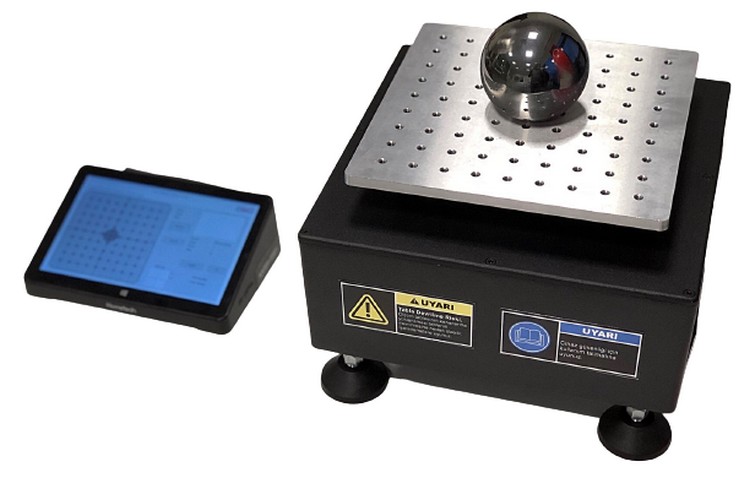
The K-GBC Gimbal Balancing Systems, which have been used by
the leading
institutions of defense industry have the following advanced
characteristics:
Measuring the unbalance, CG radius and angle of equipment such as Gimbals, missile seekers,cameras and
pods.
User-friendly software interface, data transfer to computer, real-time visualization,
gimbal balance control, origin adjustment, calibration wizard, multi-scale sensor architecture etc.
Elevation, Bank and Azimut axis can be balanced with single a machine without the need for positioning fixtures.
K-GBC Technical Specs
High accuracy Gimbal Balancing Systems
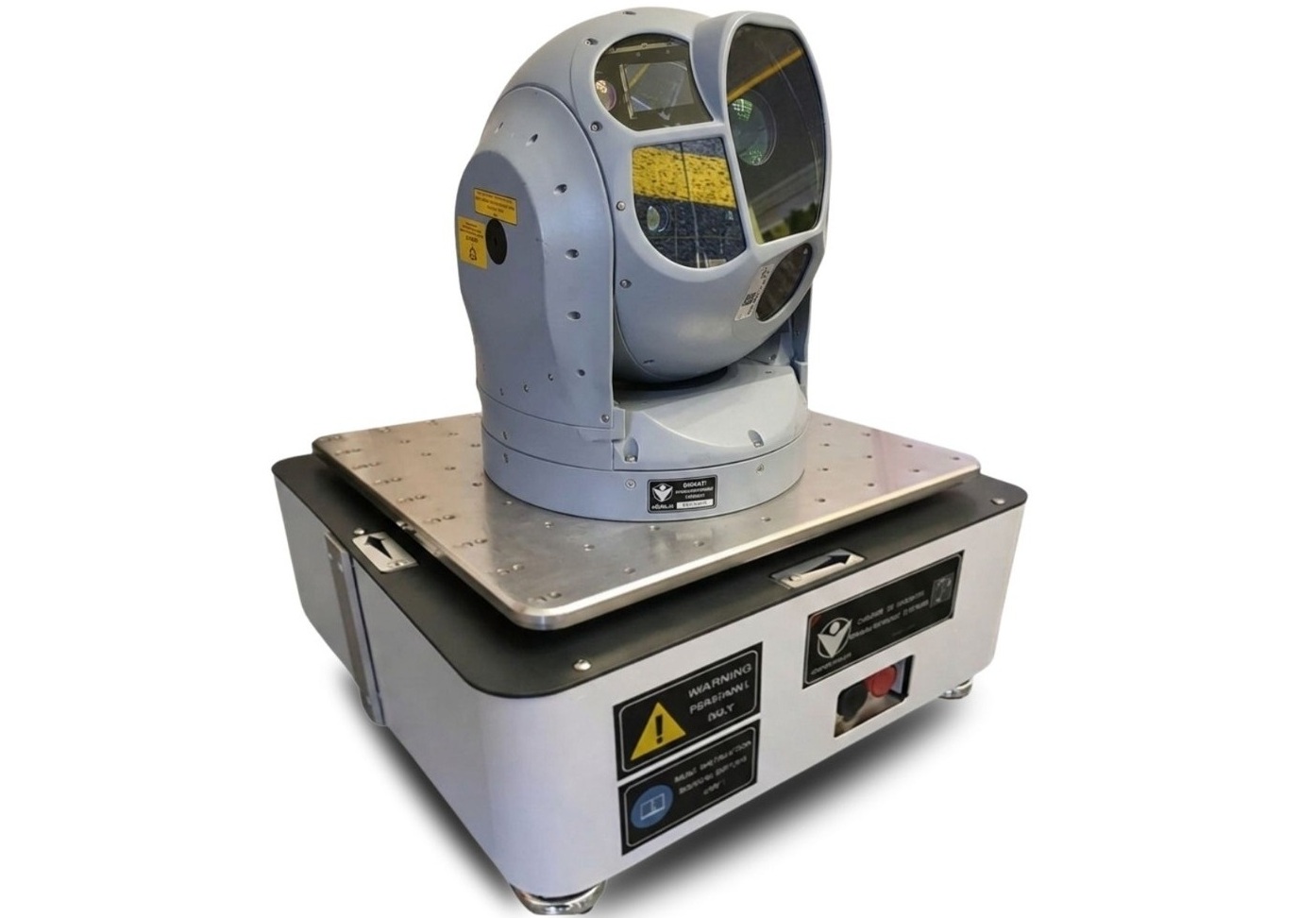
Static gimbal balancing includes the activities of precise
measurement of the center of mass change of the gimbal and
calculation of gimbal ballast weights according to this change.
The misalignment of the center of mass from the axis of rotation
results in torque formation in the gimbal and undesirable
rotation during maneuvering and vibration. It may not be
possible to reset this effect with the gimbal control mechanism.
For this reason, gimbal balancing process should be done in
every gimbal.
The measurement is performed by tilting the sample to two known symmetrical angles relative to the reference position.
Using symmetrical tilt angles allows the system to accurately determine the shift in the center of gravity and calculate the corresponding imbalance.
In general, increasing the tilt angle improves the sensitivity of the measurement and therefore increases the overall accuracy.
However, the tilt angle should remain within the mechanical limits of the fixture and the stability limits of the specimen.
With this method, gimbal systems can be balanced with an accuracy better than 0.01 mm (10µm) at the axis of rotation.
This value is typically smaller than the rotational play (clearance) of most rotating specimens,
meaning the achievable balancing precision is finer than the mechanical reference features commonly used for mounting the specimen.
K-GBC Technical Specs
 KARAKAMLAR INC.
